Adin Ross Net Worth: What Is Actually Knowable From Outside
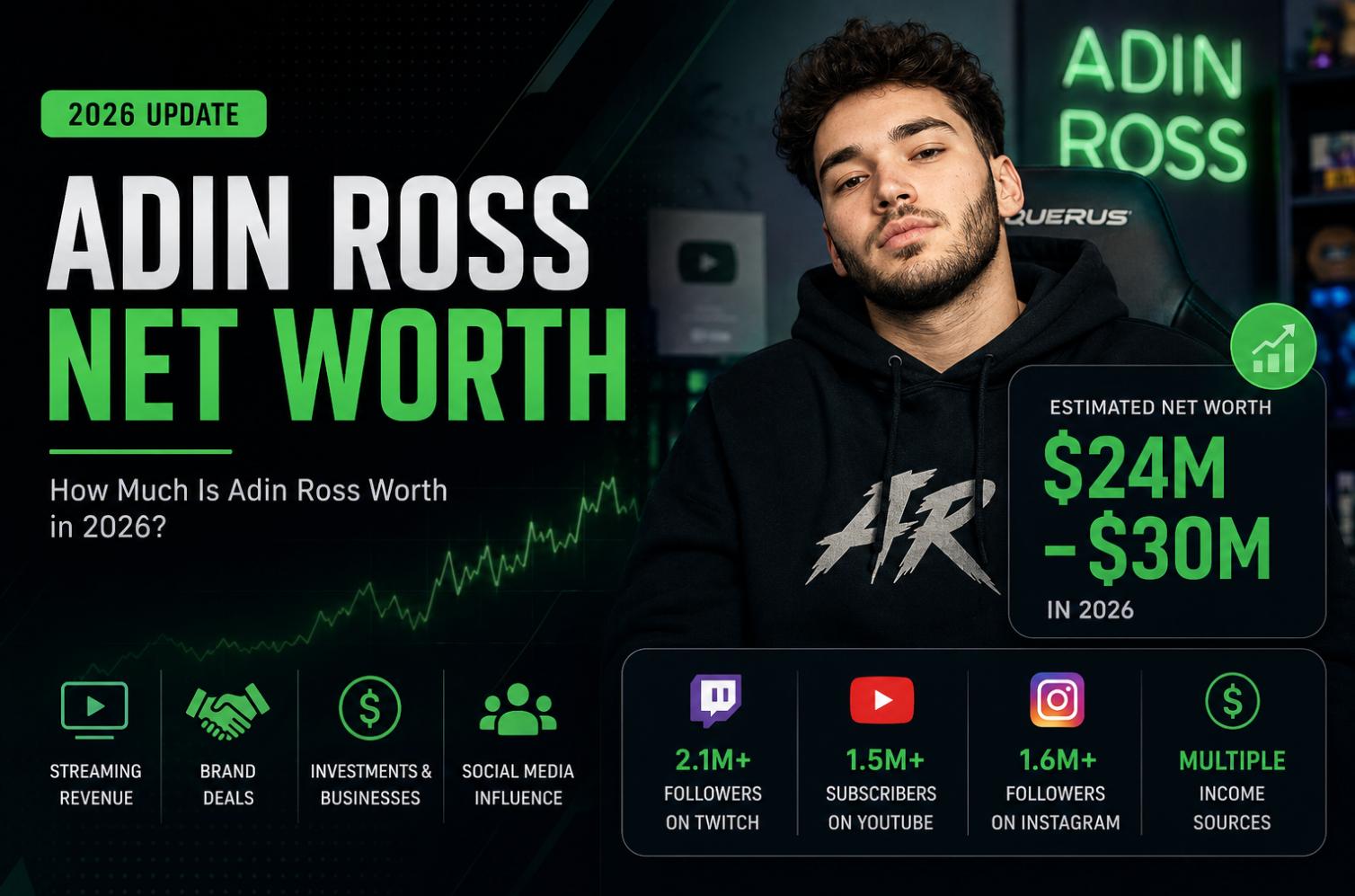
Estimating a streamer’s net worth from the outside is a specific kind of guesswork. The public sees viewer counts, sub counts on stream, big-brand collaborations, and the occasional Rolex or car on camera. What sits underneath — actual take-home from platform contracts, sponsorship deals, sub revenue, ad revenue, gambling promotions in the periods where those were active, and the tax and management-cost layer between gross earnings and personal net worth — is largely private. Adin Ross’s finances are one of the more searched examples of this pattern, and the useful move is not to invent a headline number but to explain how the number is actually built and what is publicly known.
Who Adin Ross is, briefly
Adin Ross is an American streamer who rose to prominence on Twitch during 2020 and 2021, initially through NBA 2K content and eventually through a mix of “just chatting” streams, celebrity guest appearances, and the reaction and gambling formats that dominated a specific era of large-audience streaming. He was banned from Twitch in early 2023 and moved to Kick — the newer streaming platform backed by the Stake.com founders — where he signed one of the largest streamer deals publicly reported to that point. His audience has continued to be one of the more visible in the space, moving fluidly across platforms and formats.
What is actually known about the income sources
Estimates of any streamer’s net worth are the sum of educated inferences across several income streams. For Adin Ross, the identifiable streams are:
Platform contract. The Kick deal signed in 2023 was widely reported to include a large monthly guarantee. Adin himself has referenced figures in the range of one million dollars per month during that period, though the specific mechanics — whether the figure is a guaranteed minimum, a revenue share above certain thresholds, or a bundled package with additional obligations — have not been fully disclosed publicly. Deals of that size in creator economics are usually multi-year with milestone conditions, and any accounting of them requires those details.
Subscriptions and platform revenue. Alongside the guaranteed contract, streamers earn from viewer subscriptions and platform-facilitated revenue like tips and gifted subs. On a stream of Adin Ross’s scale, this constitutes meaningful additional income, though it is typically dwarfed by the platform contract during the term of a major deal.
Sponsorships. Deal-by-deal sponsorship arrangements with brands are a major stream for large streamers. The specific brands active with Adin Ross have varied over time — apparel, gaming products, and, in the periods when they were platformed, gambling and crypto-adjacent sponsors. Individual deals in the space typically run into the tens or hundreds of thousands of dollars for a defined promotional obligation, depending on the size of the audience and the exclusivity of the deal.
YouTube and social clip monetisation. Content clipped from streams and posted to YouTube, TikTok, and Instagram generates ad revenue and reach. This is smaller per view than dedicated YouTube content but adds up at scale.
Merchandise and business ventures. Streamers at Ross’s tier typically launch merchandise, sometimes their own brands, and sometimes investments or partnerships in adjacent businesses. Public information on these is patchier and often only emerges when a specific launch happens.
Why any specific net worth figure should be treated cautiously
Third-party estimates for Adin Ross’s net worth vary widely, and the reason is that no one outside his management structure has the full picture. A published “Adin Ross net worth in 2026” figure is doing one of a few things: extrapolating from public reports of the Kick deal and known sponsorship deals, applying rough industry margins to estimated stream revenue, or simply picking a plausible-sounding number that gets shared enough times to look authoritative.
None of these approaches produces a reliable figure. Some produce estimates within an order of magnitude of reality; some do not. There are a few specific reasons the estimates diverge.
Gross revenue is not net worth. A creator earning ten million dollars gross in a year does not automatically have ten million dollars in personal net worth. Taxes, management fees, business expenses, agency splits, editor and staff payroll, and lifestyle spending all sit between gross and net. Creators who have publicly discussed their finances — Ludwig, Hasan Piker, and others — have made this gap explicit; industry commentary confirms it as the norm.
Multi-year contract disclosures are misleading. Reporting on “a $100 million deal” typically refers to a total contract value that includes performance-based components, non-cash considerations, and multi-year commitments. Treating the headline number as an immediate net worth addition badly overstates the reality.
Investment and asset positions are unknown. A creator’s net worth is a snapshot of all assets minus all liabilities. Real estate, equity in businesses, cryptocurrency holdings, brokerage accounts, and outstanding liabilities are not publicly reported. Any external estimate that ignores this layer — and most do — is telling only part of the story.
How professional estimates get built
The estimates that come closest to reality are the ones done by people who understand creator economics from the inside.
Talent agencies represent creators and know deal sizes across the industry. Their internal benchmarks for what “a top-100 streamer earned in 2024” are probably the most calibrated numbers in existence, but they are proprietary and not shared publicly.
Business publications occasionally produce careful pieces on creator finances — Forbes, Bloomberg, and specialised outlets like Tubefilter have done this for individual creators. These reports typically triangulate from public disclosures, off-the-record sources, and industry benchmarks. When available, they are much better inputs than aggregator sites.
Court filings, tax records that become public through litigation or divorce proceedings, and regulatory filings for creator-adjacent companies occasionally surface concrete financial information. These are rare but authoritative when they appear.
The specific factors that make Adin Ross’s picture unusual
A few features of the trajectory are worth naming because they affect any honest estimate.
Platform migration matters. The move from Twitch to Kick was accompanied by a large contract but also by a fundamental change in the underlying audience surface. Kick has a smaller total user base than Twitch, and the economics of a creator’s revenue on the platform depend on the platform’s overall growth. A guaranteed contract insulates the creator from short-term audience volatility during its term but sets up a specific renegotiation moment when the contract ends.
Content mix matters. Ross’s stream content has, at different times, included gambling promotions (when Kick permitted and Stake.com sponsorships were active), celebrity appearances (which drive spikes in viewership and secondary content revenue), and standard “just chatting” streaming. Each of these carries different economics, and the mix has shifted over the years in response to platform policies and personal decisions.
Public image and controversy affect deal availability. Streamers who have been at the centre of controversies — Ross has, at various points — face variable brand availability. Some sponsors withdraw; others enter. The specific brand roster at any moment reflects the current risk profile from advertisers’ perspectives.
A short glossary for anyone new to creator finance
Some vocabulary keeps appearing in coverage of streamer earnings and is worth defining plainly.
Guaranteed minimum. A floor payment from a platform to a creator regardless of stream performance. Guarantees are common in major deals and are the reason platform contracts can appear larger than platform revenue would suggest.
Revenue share. The portion of platform-generated revenue (subs, ads, tips) that flows to the creator. Standard rates vary by platform and by tier.
Sub split. The specific division of subscription revenue between platform and creator. Historically Twitch’s baseline was 50/50, with top creators negotiated up to more favourable splits; Kick has advertised more favourable defaults.
Sponsorship inventory. The set of promotional slots (mid-stream reads, YouTube video sponsorships, social posts) a creator has available to sell. A creator’s inventory shrinks as they take deals and refills over time.
Talent management percentage. The cut that a creator’s agent or manager takes from deals they broker. Industry standard is often around 10-20% of the deal value, though structures vary.
The wider takeaway on creator net worth reporting
The category of “streamer net worth” content on the web is, structurally, one of the least reliable niches of consumer information. Aggregator sites regenerate the same numbers with light changes across many pages; those numbers rarely represent anyone’s careful analysis; they are optimised for search intercept, not accuracy. Readers who take these figures seriously are consuming largely fictional content dressed as reporting.
The healthier posture is to treat any specific dollar figure as a rough placeholder — an order-of-magnitude signal at best — and to focus on what is actually knowable: the platform contract’s rough scale, the range of publicly reported deals, the trajectory of the career, and the risk factors that will shape earnings going forward. This is less satisfying than a definitive number, but it is closer to the truth than the confident estimates that populate most search results for this kind of query.
A short close
Adin Ross’s real net worth is not knowable from the outside with any precision. What is knowable is the shape of it: a major streamer with a large multi-year platform contract, meaningful sponsorship revenue, standard creator income streams from social clip content and merchandise, and the same gap between gross earnings and personal net worth that shapes every large creator’s financial reality. Anyone searching this term looking for a single confident number should treat the confident numbers they find with the appropriate skepticism, and read the more careful reporting when it exists as the closest thing to a real answer available.