Methatreams – What the Site Is and Legitimate Alternatives
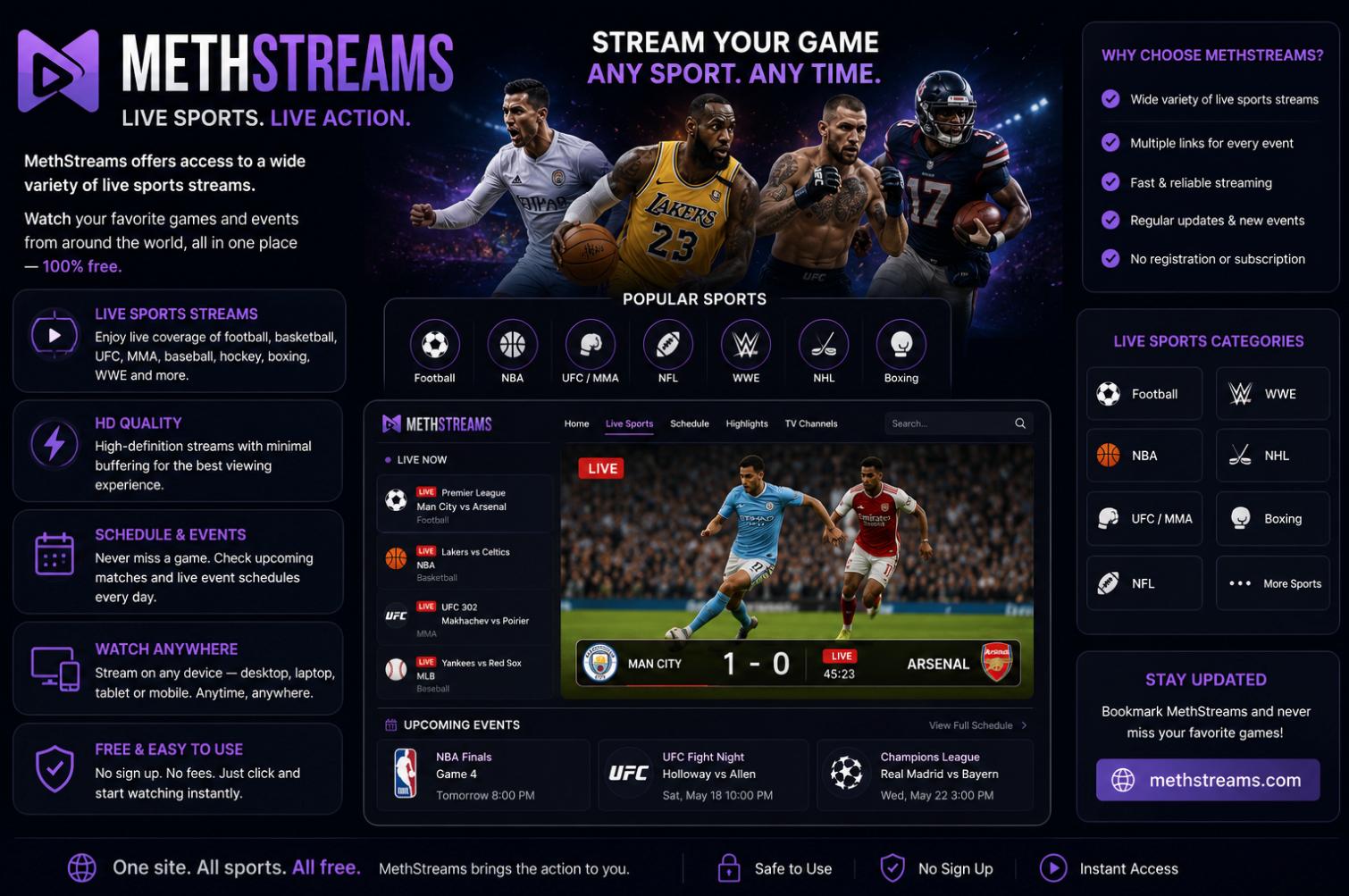
The search term “methatreams” — a variation on the more common “methstreams” — points to a specific corner of the internet: the ecosystem of unauthorised live sports streaming sites that have proliferated as legitimate sports broadcasting has fragmented across expensive streaming subscriptions, regional restrictions, and increasingly complex rights arrangements. Users searching this term almost always have a specific goal — they want to watch a specific game live and are looking for a way to do so without navigating the fragmented paid landscape. This piece works through what the site actually is, why the wider category exists, what the specific risks are, and what legitimate alternatives cover the same use case with fewer trade-offs.
What the site actually is
Methstreams and its close variants have been part of the unauthorised sports streaming ecosystem for years. The core operation is simple: the site aggregates links to live streams of major sporting events — NFL, NBA, NHL, MLB, UFC, Premier League football, Formula 1, boxing, and various other sports — and presents them in a browsable interface. Users click through to a specific game and watch the stream in a browser window.
The streams themselves are typically not hosted by the site. They are embedded from third-party streaming servers, often located in jurisdictions where copyright enforcement is weaker than in the United States or the European Union. The site itself functions as a directory and a viewer interface, while the actual content is served by rotating upstream sources that appear and disappear as they are taken down.
Domain instability is a defining feature of this space. Any specific URL for methstreams or its variants has a limited lifespan — domains get seized, blocked at the DNS level, or abandoned when the operator moves to a new property. That is why search behaviour around the site includes many variant spellings; users are chasing whatever URL is currently up.
Why the wider category exists
The unauthorised sports streaming ecosystem exists because the legitimate sports broadcasting landscape has become genuinely difficult to navigate for many viewers. Understanding the structural picture explains why the category persists despite ongoing enforcement.
Sports rights are fragmented across many providers. In the United States, watching every NFL game requires some combination of local broadcast, ESPN, NFL Network, Amazon Prime Video (Thursday Night Football), Peacock (some games), and out-of-market packages. Watching Premier League football requires Peacock in the US, Sky and TNT Sports in the UK, and different providers in other regions. The specific package needed to watch any specific game varies by day and by season.
Streaming subscription costs have accumulated. A viewer who wants to follow multiple sports across the calendar year may find they need five or six paid subscriptions to cover their interests, at combined monthly costs that exceed what a traditional cable package once cost.
Regional restrictions block access even for paying viewers. A US customer paying for MLB.TV is blackout-restricted from watching local team games; a UK customer paying for a specific streaming service may not be able to access it when travelling internationally. The friction points imposed by geographic rights fragmentation create their own demand for workarounds.
Timing pressures amplify the friction. Sports are consumed live in a way that most other content is not — a viewer who wants to watch a game happening now has minutes to solve the access problem, and any friction in the legitimate path pushes them toward unofficial alternatives.
The specific risks of using unauthorised streaming sites
Being honest about the risks of using sites in this category matters, both because the risks are real and because users deserve to understand what they are choosing.
Malware and adware are the most immediate practical concern. Unauthorised streaming sites tend to run on aggressive advertising networks, and the ads served can include pop-ups, prompts to install browser extensions, and drive-by download attempts. A user with a well-configured modern browser and an ad-blocker is largely protected; a user without those protections is materially exposed.
Phishing risks accompany many of these sites. Prompts to “verify your device,” install a specific plugin to view the stream, or provide payment information for a fake service are common. None of these should be complied with; the legitimate viewing experience for these sites is entirely browser-based.
Legal exposure varies by jurisdiction. In the United States, watching a stream from an unauthorised site is generally not treated as a criminal act at the user level; the enforcement focus is on the operators of the sites. In some European jurisdictions, users have received warning letters or fines for streaming from known unauthorised sources. UK enforcement has similarly increased in recent years. Legal risk varies substantially by country and by specific enforcement patterns.
Data collection is a real consideration. Any site through which you access streaming content can log your visits, browser fingerprints, and viewing patterns. Users who care about privacy should be aware that unauthorised sites have no accountability for how they handle this data.
Site instability is a persistent frustration. A stream may drop mid-game; a domain may go dark; a specific event may not be available on any of the current unauthorised properties. Reliability is meaningfully worse than legitimate services provide.
What the site provides when it works
An honest description of what unauthorised streaming sites provide when they are up and functioning explains the appeal without endorsing the practice.
Broad coverage. A user who cares about multiple sports and multiple leagues can, in principle, find streams for most major events at a single interface. This convenience is real and is the primary value the sites offer.
No subscription cost at the user level. The streams are free to access; the operators monetise through advertising rather than through user fees. This is the specific selling point for users who cannot or will not pay for multiple legitimate services.
Cross-region access. Streams sourced from various international broadcasters sometimes reach viewers who would be geographically restricted from the original broadcast. This is genuinely appealing to viewers who travel or who follow leagues broadcast primarily in other regions.
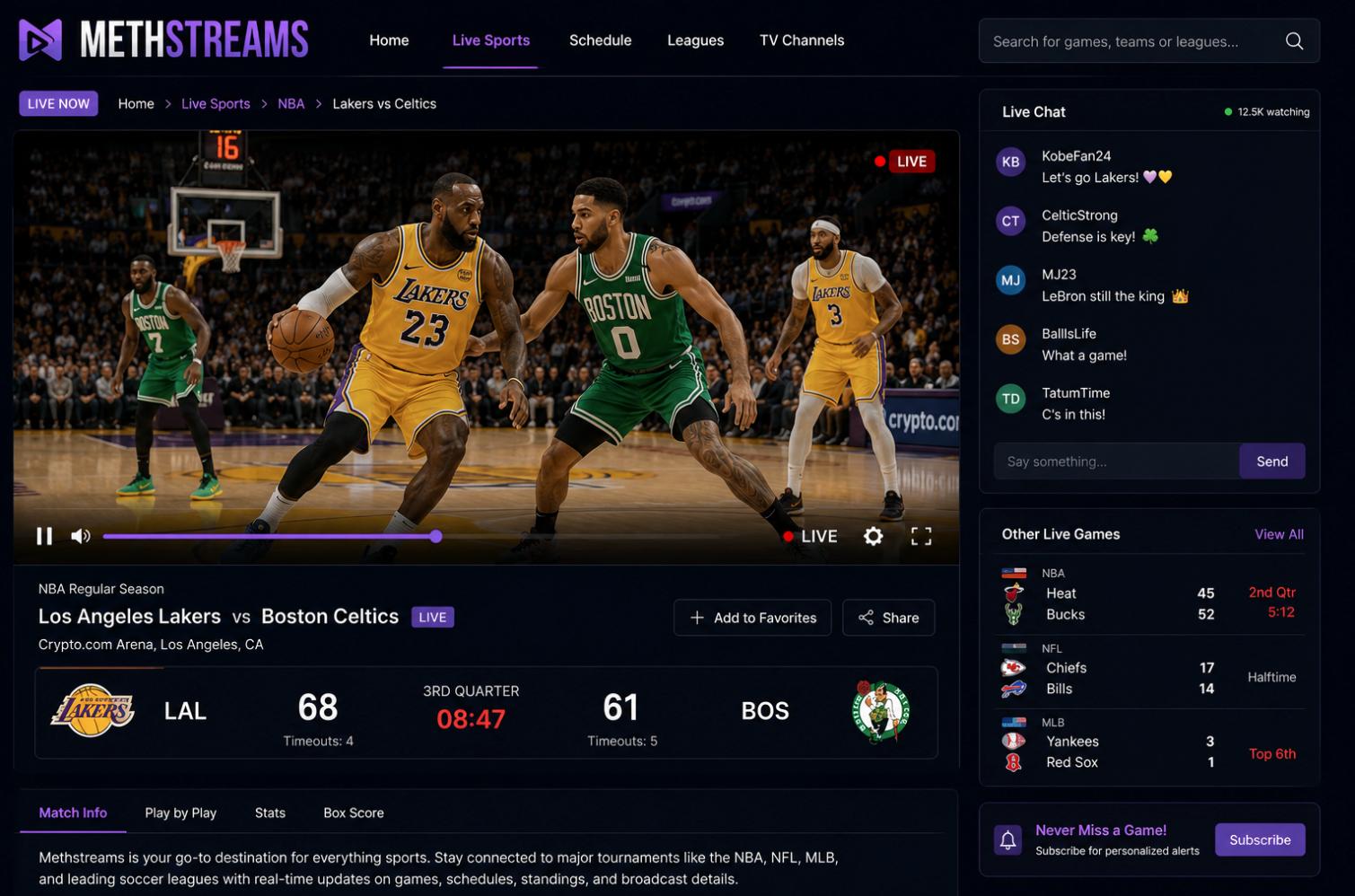
Interface simplicity. The best of these sites present a clean directory of live events, letting users click through directly rather than navigating multiple provider apps. This is a UX advantage over the fragmented legitimate landscape.
Legitimate alternatives worth knowing about
The legitimate sports streaming landscape has expanded considerably in recent years, and users who consider only the traditional major providers may miss options that fit their needs better.
Bundled sports services aim to cover multiple leagues in one subscription. Fubo, DirecTV Stream, YouTube TV, and Hulu Live TV each package a mix of live sports channels into a single monthly fee. The specific league coverage varies, and none covers everything, but for viewers who watch several sports one of these often works out cheaper than assembling individual subscriptions.
League-specific services provide the deepest coverage of specific sports. NFL Sunday Ticket (through YouTube), NBA League Pass, NHL Center Ice, MLB.TV, F1 TV, UFC Fight Pass, and the various football (soccer) streaming services in different regions each provide comprehensive access to their respective sport for a specific fee. For dedicated fans of one sport, these are often the best value.
Free ad-supported services have grown as broadcasters have experimented with new distribution models. Some Premier League matches, some NFL games, and various other events appear on free tiers of streaming services (Amazon Prime Video’s occasional free events, Peacock’s rotating free content, YouTube’s official live coverage of specific events).
Traditional broadcast remains an option. Over-the-air antennas continue to provide access to broadcast networks that carry major sporting events. The specific coverage varies by market, but the cost per game is essentially zero after the antenna hardware.
VPN-assisted access to legitimate services provides another workable path for users who travel or who want to access specific regional services. Using a VPN to access a service you have paid for in your home region is a specific practice with its own terms-of-service considerations depending on the provider.
Where the landscape is heading
Two trends are worth noticing for anyone thinking about this space over the medium term.
Legitimate streaming continues to consolidate. Providers have realised that the extreme fragmentation of the mid-2020s produced consumer resistance, and there is some movement toward broader bundles that reduce the number of subscriptions a comprehensive sports viewer needs. This trend is slow but real.
Enforcement against unauthorised streaming has intensified. Rights holders have invested in legal action, DNS blocking, and specific enforcement partnerships with hosting providers and payment processors. The specific sites that dominate the space this year are unlikely to be the same sites that dominate next year, and users who rely on unauthorised streaming face increasing friction over time.
A short close
Methstreams and its variants exist because the legitimate sports streaming landscape has not fully solved the problem it was supposed to solve — making it easy and affordable for interested viewers to watch the sports they care about. The unauthorised sites are not a permanent solution; they are unreliable, expose users to real risks, and are subject to ongoing enforcement. The wider category is worth understanding, but so are the legitimate alternatives, which have grown in ways that may cover a specific viewer’s needs better than the unauthorised route does. Anyone thinking about this space should evaluate both sides honestly and pick a path that reflects their actual priorities across cost, reliability, ethics, and legal exposure.