Slope 2 Unblocked
What Changed and How to Play It Better
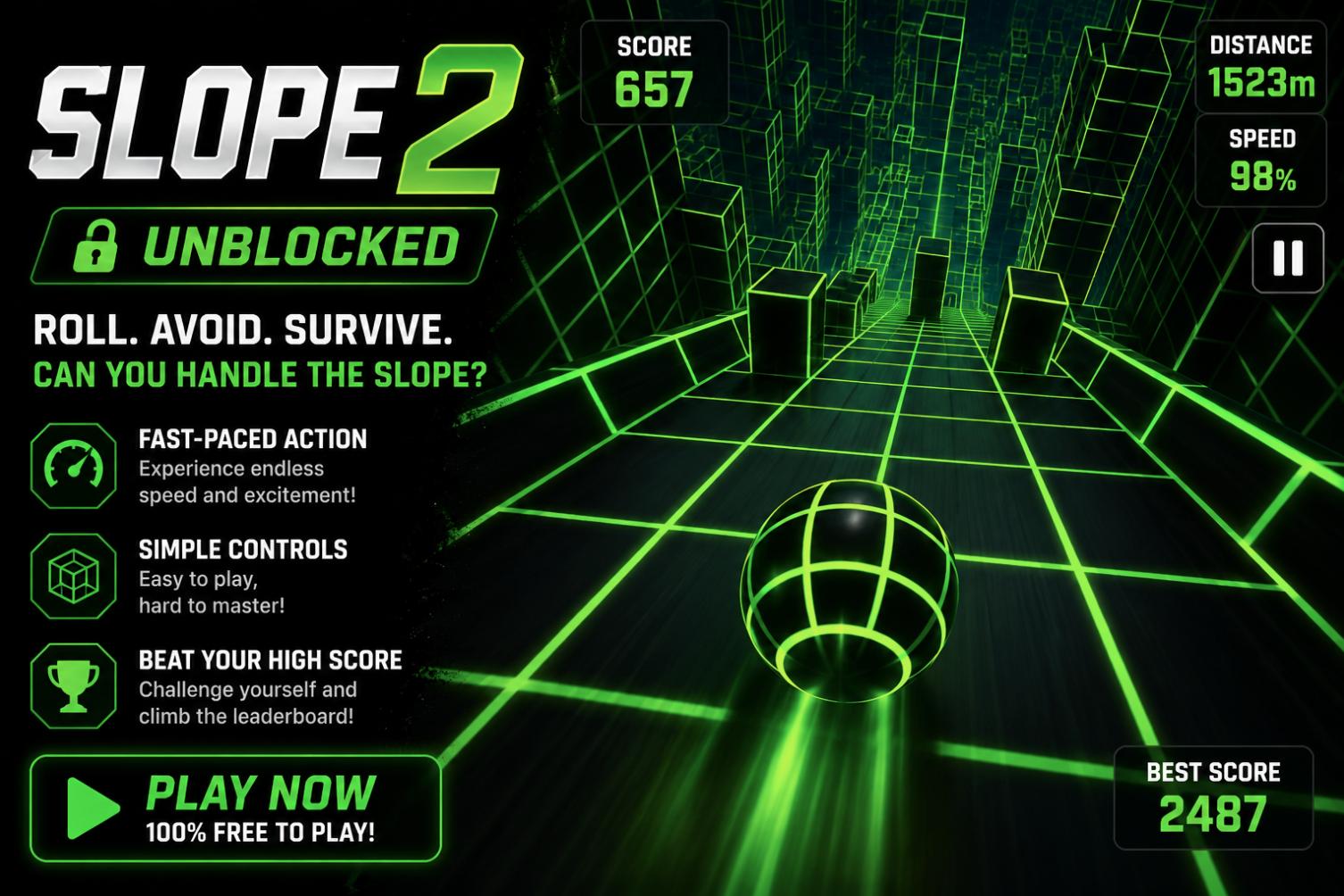
Slope 2 is the continuation of one of the most recognisable browser games of the last decade. The original Slope arrived quietly, spread through school networks and gaming portals, and settled into a persistent audience that plays it in small daily bursts. Slope 2 inherits that formula and expands it in ways that are both faithful to the original and consciously new. This piece treats the game on its own terms — what changed from the first game, what stayed the same, why the specific formula continues to work, and how the browser-unblocked experience compares to the original access path.
The specific formula the game inherits and updates
The core loop that never needed reinventing
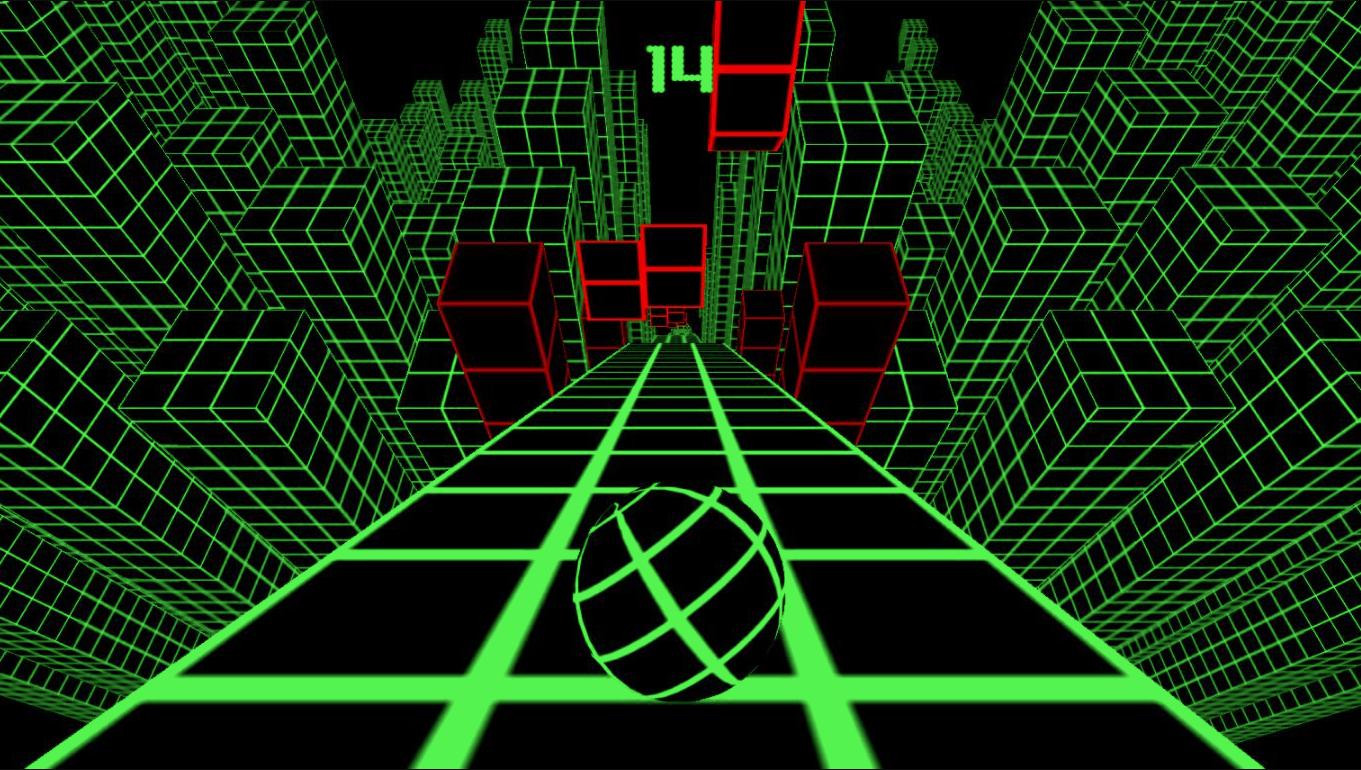
The original Slope’s design was remarkably clean. A ball rolls down an infinite gradient. The player steers left and right. The gradient introduces obstacles — red blocks that end the run, gaps that must be avoided, and specific configurations that require reading the terrain a second before the ball reaches it. Speed accelerates gradually across the run, which increases both the challenge and the mounting tension. Failure is absolute; the ball hits something red, and the run is over. Restart is instant. That loop is what Slope 2 keeps.
Where Slope 2 differs
The sequel introduces more environmental variety than the original delivered. Track segments include tunnels, splitting paths, elevated sections, and specific structural motifs that break up the visual sameness of the endless-runner format. The colour palette has been expanded, and specific segments look distinct enough to become mental landmarks in longer runs.
Difficulty ramping has been retuned. Slope 2 hits challenging speeds slightly earlier than the original, which means new players die faster but veteran players spend more of the run at the intense end of the difficulty curve. That is a specific design decision — one that respects the audience that had already played hundreds of hours of the first game and wanted a version that got to the interesting part faster.
Multiplayer and community elements appeared in some ports of Slope 2 and adjacent titles, though the core single-player-highscore experience remains what most players engage with. The best way to think about Slope 2 is as the same game with more texture, not a fundamentally different design.
What the browser-unblocked experience actually delivers
Access and setup
Slope 2, like most casual browser games in its space, is available across a number of unblocked-games portals with essentially no setup required. Loading the page starts the game. There is no account creation, no installation, no launch-screen wait beyond the initial asset download. That accessibility is a substantial part of why the title dominates its category — the friction to play is closer to zero than any comparable casual game.
The specific portal chosen affects the experience meaningfully. Well-maintained mirrors deliver the game at stable frame rates with intact audio and no interstitial advertising between runs. Weaker mirrors introduce ad interruptions that break the game’s specific tension, drop frames on the same hardware, or introduce input lag that makes the higher-speed sections much harder than the game intended.
Hardware performance considerations
Slope 2 is more visually complex than the original, and older hardware feels it. A Chromebook from the early 2020s may run the game noticeably worse than a recent model, particularly during segments with denser geometry or particle effects. On lower-end devices, dropping the visual quality where the port allows it produces a smoother game than trying to run at defaults.
Input latency matters for a game that runs at high speed. Wireless keyboards and trackpads sometimes introduce enough latency to affect specific reaction-time moments in a way a wired keyboard would not. Players who take their scores seriously often notice this and adjust accordingly.
Audio and immersion
Slope 2 leans into a specific electronic-music atmosphere that shapes the run’s tension. On mute — the common condition in a classroom or shared workspace — the game loses a substantial part of its intended feel. Headphones or a private listening context restore the audio channel and produce a materially better experience.
Playing well — the specific habits that raise scores
Anyone spending real time with Slope 2 develops a set of habits that separates casual runs from sustained high-score attempts. The habits are worth naming because they translate across the wider casual endless-runner category.
Look ahead, not down. New players focus on the ball’s immediate position; experienced players focus on the section of the track ten to twenty units ahead. The additional reaction time is the difference between surviving a specific corner and clipping the red block on the outside of it.
Anticipate splits. When the track splits, the split point is a reaction-time moment. Practising specific splits until each choice feels default rather than reactive removes a meaningful source of death.
Steer with small inputs. Slope 2 rewards smooth, minimal corrections rather than aggressive lane changes. The physics respond to sharp inputs by carrying momentum in ways that lead to the outside edge of the track — which, at high speed, is exactly where the red blocks tend to be.
Do not over-tilt. Emotional overinvestment after a bad death produces more deaths. High scores accumulate across many attempts. Playing calmer produces higher averages than playing more intensely.
Take short breaks. Fifteen minutes of continuous play degrades reaction time meaningfully. The next fifteen produces worse runs than the first fifteen did. Standing up, looking away, and returning fresh is the specific reset that lets long sessions actually stay productive.
The wider category Slope 2 sits inside
The endless-runner tradition
Slope 2 belongs to a specific gaming tradition — the endless runner, or endless faller in this specific case — that has been a browser and mobile mainstay for over a decade. Temple Run popularised the format on mobile in 2011; Subway Surfers extended it to a durable global audience; Vector, Alto’s Adventure, and various imitators pushed the visual style and mechanics in different directions. The browser side of this tradition runs from Chrome’s built-in dinosaur game to a rotating cast of casual titles that have kept the format alive.
Slope specifically occupies a niche within that tradition: the reflex-heavy, first-person-adjacent, minimalist-visual corner. Its closest thematic cousins are less the platformer runners and more the pure reflex games — Geometry Dash, various rhythm-based reflex games, and the harder-edged flow games.
Where the format is heading
The category has proven remarkably durable across technology transitions. Flash to HTML5. Desktop to mobile. Portal-based distribution to social-network distribution. Through all of it, the specific loop keeps working because it maps to how attention actually works in short windows. Slope 2’s continued relevance is a specific example of that durability — a game that succeeds on the same terms games in this category always have, without requiring extensive re-invention.
What may shift the category eventually is not any new mechanic but the underlying platform. Web browser gaming continues to gain capability. WebGPU, better mobile browser performance, and the maturation of Progressive Web App distribution mean casual browser games in 2028 or 2030 will be able to do things that were not possible when the original Slope launched. Whether those capabilities produce meaningfully new games or just prettier versions of existing formats is not yet clear.
What Slope 2 says about sequels in the casual space
Sequels to casual browser games are unusual, and their success rate is uneven. Most viral browser hits do not spawn coherent successors; the developer either does not exist as a durable studio, or the design does not extend cleanly, or the audience moves on before a sequel can ship. Slope 2’s existence and continued relevance is, in that context, a small achievement.
The specific thing the sequel gets right is that it does not try to do more than the original does. It extends variety without breaking the loop, respects the muscle memory the audience built, and iterates on the tuning without discarding the specific things that made the first game click. Casual sequels that survive tend to share this restraint. Sequels that fail usually add too many mechanics, chase depth the audience did not ask for, or restructure the loop in ways that require players to relearn what they already knew.
For players engaging with Slope 2 now, that restraint means the transition from the original is seamless. For the wider casual browser gaming space, it is a small case study in how to extend a durable hit without breaking it — a specific skill more designers should study before shipping the next attempt at the pattern.
A short close
Slope 2 is a competent, focused sequel that respects the loop of the original and gives players more of what worked. Playing it through an unblocked-games portal is straightforward and, on a well-maintained mirror, delivers most of what the game intends. Players approaching it for the first time should expect a game that reveals its depth only through repeated play and rewards the specific attention it asks for. Long-time Slope players will find the sequel gives them exactly the game they already knew they liked — which is, in the specific context of a casual browser sequel, the correct outcome.