Snapchat Story Viewer: Why Tools Deliver Less Than Claimed
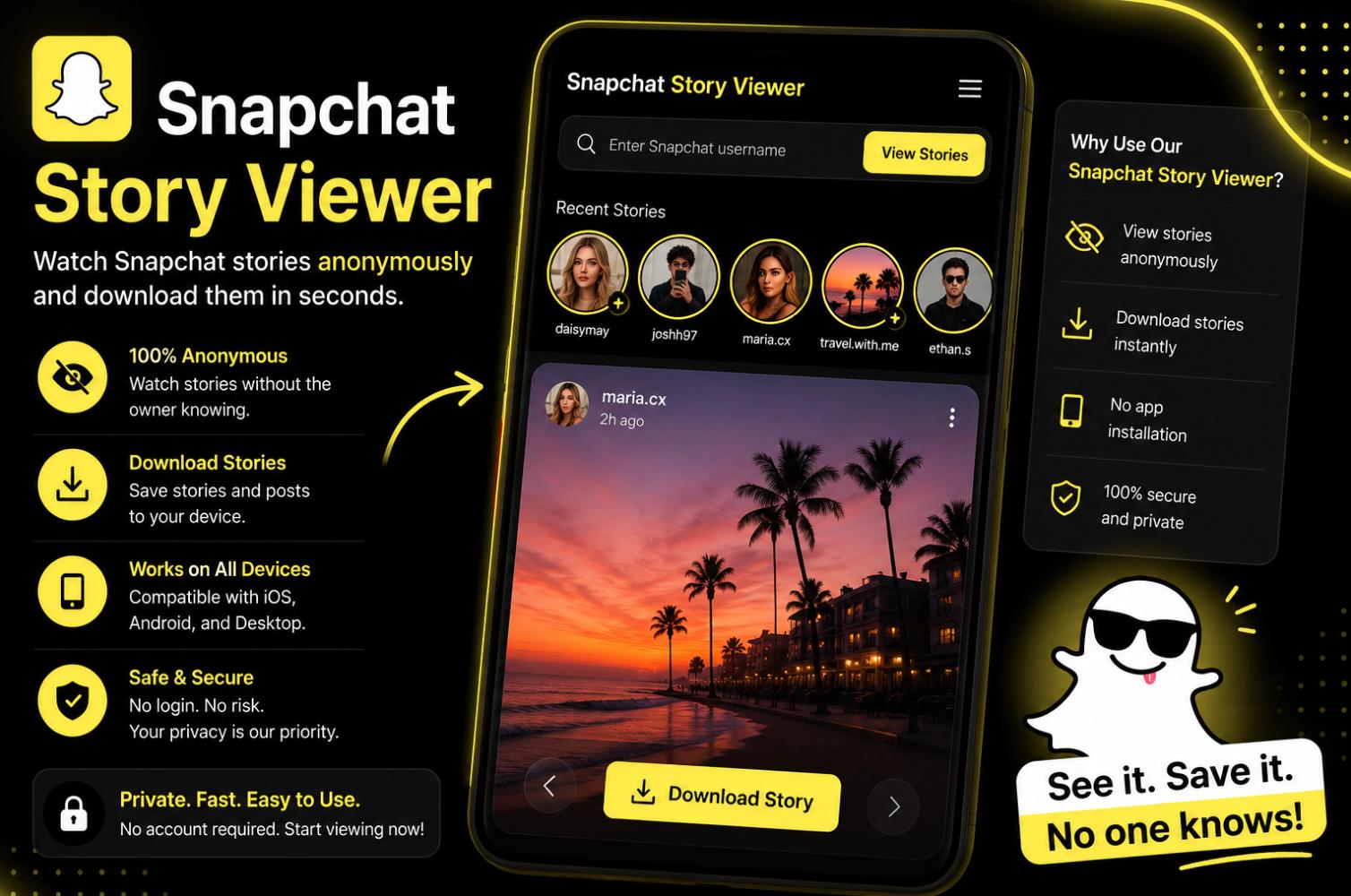
Snapchat has been running Stories longer than any of its competitors. The feature launched in 2013 as one of the platform’s original defining innovations — 24-hour ephemeral posts that disappeared and left a viewer list on the creator’s side. That model has been copied by Instagram, Facebook, YouTube, LinkedIn, and TikTok in the years since, but Snapchat’s version has always been the most privacy-guarded of them. That specific architectural fact shapes everything about the “Snapchat story viewer” search behaviour and the tools that claim to help with it.
What Snapchat’s specific model actually is
Snapchat’s core architecture is more private than any of its story-format peers. Accounts are private by default in a stronger sense than on Instagram or TikTok — you cannot easily browse an unknown Snapchat user’s stories the way you can browse an unknown Instagram or TikTok user’s public posts. Adding a user requires a specific handshake: they add you back, or you appear in each other’s Quick Add, or you connect through a shared link.
Once added, story visibility is granular. Users can post to their whole friends list, to a Custom Story with a specific subset, or to the public Spotlight feed which has different visibility rules altogether. Viewer lists on personal stories are visible to the creator for a limited window after posting.
Snapchat also famously introduced the screenshot notification — a creator is told, in-app, if a viewer screenshots their story. That specific product decision, made in Snapchat’s early years, is one of the reasons the platform’s Stories always felt more intimate than parallels on other platforms, and it is also why “silent viewer” tools for Snapchat have had a harder time than tools for other platforms.
What the third-party story viewer tools actually do
Understanding what the anonymous-viewer category can actually accomplish on Snapchat requires being honest about the platform’s specific architecture.
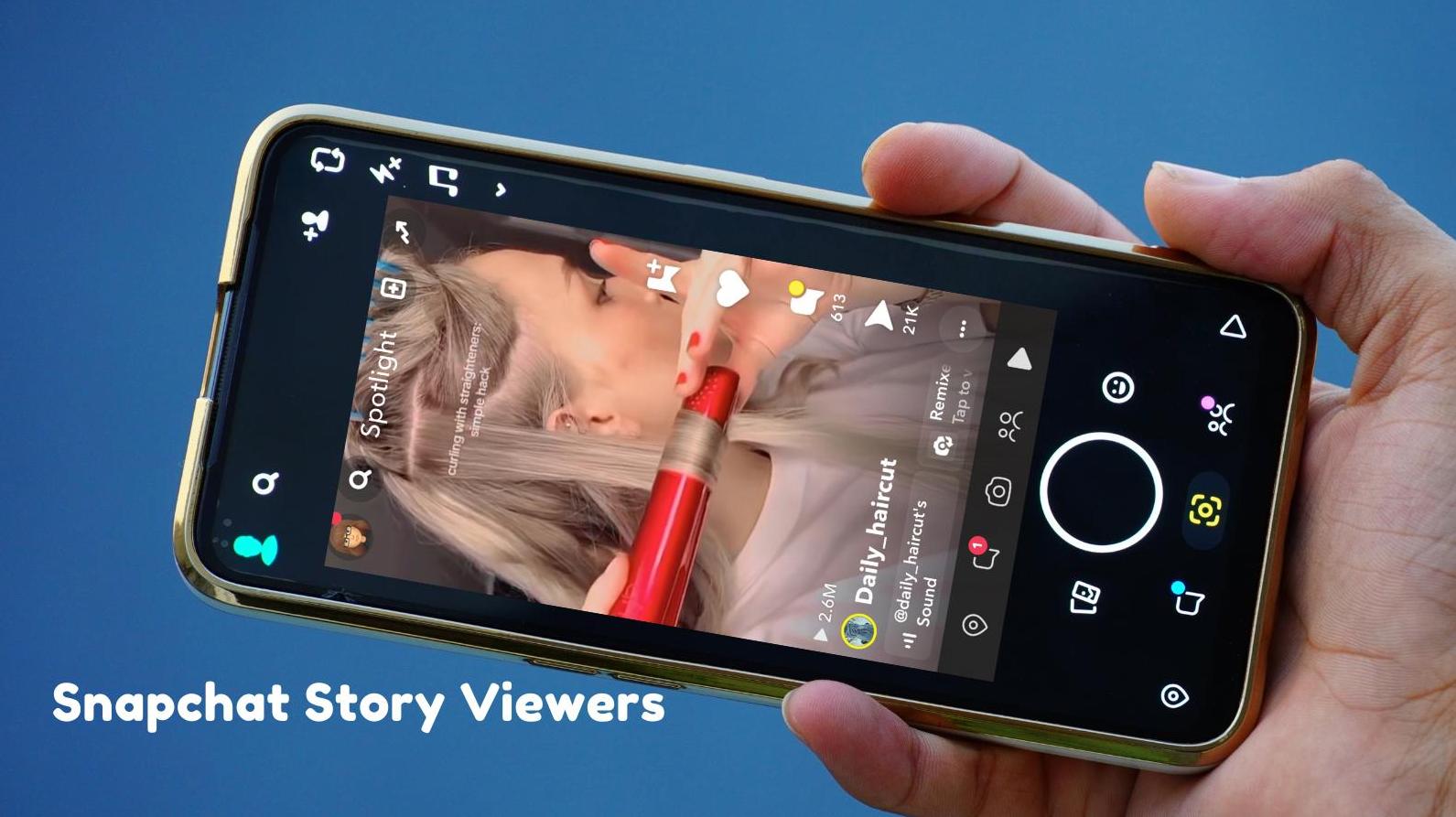
For public Spotlight content, some tools can serve as web wrappers around what is publicly accessible anyway. Spotlight is Snapchat’s TikTok-like feed of publicly submitted short videos, and its content lives at a different layer of visibility from personal Stories.
For personal Stories from friends’ accounts, the picture is much more restricted. Snapchat’s platform does not expose personal Story content to unauthenticated requests. A third-party tool cannot pull a friend’s Story without logging in as that account (or as an account with permission to view it), and any tool claiming otherwise is either misrepresenting its capability or doing something specifically against the platform’s terms.
For Stories from users who are not on your friends list, the personal Story content is not available at all. Snapchat’s architecture does not permit browsing unfamiliar users’ Stories in the way Instagram or TikTok allow browsing public accounts.
The practical implication is that the honest “Snapchat story viewer” tool category is much smaller than the marketing suggests. Most tools that advertise themselves as such deliver less than they claim, deliver nothing, or attempt to harvest credentials.
The specific risks worth understanding
The risks associated with third-party Snapchat tools are more concentrated than the analogous risks on other platforms, precisely because Snapchat’s architecture makes the promised functionality harder to deliver honestly.
Credential phishing is the primary concern. A Snapchat viewer tool that asks for your Snapchat username and password is almost certainly not delivering what it claims. Instead, it is capturing credentials for the operator to use — either to access your account directly, to sell the credentials, or to build a corpus of accounts for other purposes. There is no legitimate reason a third-party viewer tool should need your Snapchat login.
Account bans follow from third-party tool use. Snapchat’s terms of service specifically prohibit unofficial clients and third-party services that interact with the platform on a user’s behalf. Users caught using these tools — through IP fingerprinting, behavioural detection, or credential-matching with known breaches — face account restrictions or bans.
Downloads and installations pushed by these tools carry standard malware and adware risks. A “Snapchat viewer app” downloaded from an unofficial source is a common vector for mobile-side compromise.
Scam-level dishonesty is common. Some tools present themselves as free viewers but require payment before displaying anything. The paying user then discovers the tool does not work. Refunds are difficult, and the operator moves to a new domain within weeks.
How Snapchat itself handles view attribution
A specific technical picture is worth understanding for anyone thinking about what “anonymous” means in the Snapchat context.
When you watch a friend’s Story, your username appears in the creator’s viewer list for as long as the Story is active. The list is ordered by a mix of recency and Snapchat’s ranking; it is not strictly chronological.
Screenshotting a Story triggers a specific notification to the creator. This has been a Snapchat feature since the early years and remains active. Users who screenshot Stories should assume the creator will know.
Screen recording, on some devices and in some Snapchat versions, also triggers notifications. The specific behaviour varies with device and app version, but users should assume Snapchat can detect most active recording behaviours.
Using a third-party app or a mirroring service to view Stories from a device that is not signed into Snapchat is unreliable and, on modern versions of the app, is much less effective than it may have been years ago.
The practical alternatives that actually exist
Users who genuinely want to view someone’s Stories with less exposure than the default view attribution have a small set of practical options that stay inside the platform’s architecture.
Use Snapchat’s own features. If you want to unfollow someone without unfriending them (which would end the mutual visibility), remove them from your Best Friends list, or restrict specific interactions, the platform’s own controls handle this cleanly.
Create a secondary account. Snapchat allows multiple accounts, and using a secondary account with a different username to view Stories provides a form of pseudo-anonymity — the creator sees a view from a username you have chosen not to publicly associate with yourself. This has been a common pattern for users with legitimate privacy concerns and for users with less legitimate motives. It is not against the terms of service, but adding someone as a friend from a secondary account you have created to specifically evade being visible to them shades into terms-of-service violation.
Accept that some content is not for anonymous viewing. If a creator has posted to a Custom Story or to a small friends list, they are explicitly choosing who sees the content. Working around that intent is a specific choice worth thinking about honestly.
Watch on your primary account and accept attribution. In most personal contexts, this is the correct choice. Users who watch a friend’s Story leave a view; the friend sees it; the world does not end. The specific effort to hide is often disproportionate to the underlying stakes.
Where the search intent actually falls
Users searching “Snapchat story viewer” fall into a few recognisable categories, and being honest about which one you belong to sharpens the sensible response.
Casual curiosity about a specific person — an ex, a former friend, someone you knew years ago — is the most common intent. For this group, the practical answer is that the tool category delivers little, and the best options are either watching from a secondary account or accepting attribution.
Genuine security research or journalism has legitimate use cases for face-search-adjacent tools; Snapchat story viewers are less commonly part of these workflows because of the platform’s architecture.
Monitoring behaviour that shades into stalking is a specific concern that users should be honest with themselves about. If the impulse to view someone’s content anonymously is part of a pattern of tracking a specific person against their evident preferences, the impulse itself is worth examining separately from the tool question.
What Snapchat has changed over the years
Understanding Snapchat’s Stories in 2026 requires some awareness of how the feature has evolved since launch. Early Snapchat Stories were simpler — just chronological posts to a friends list — but the platform has layered increasing complexity and privacy controls onto them over the years. Custom Stories for smaller subgroups arrived in 2016. Public Stories and later Spotlight extended the format beyond the friends graph. Story Replies, chat-attached message threads, and various group formats have all shifted where the boundaries actually sit.
Anyone thinking about Snapchat Stories today is engaging with a much more layered visibility model than the launch version implied. Third-party viewer tools that were built against older versions of the platform work worse today, and the trajectory is toward more restriction rather than less. For long-term thinking, that trajectory matters — the ecosystem of unofficial tools is under increasing pressure from both platform-side controls and legal considerations.
A short close
Snapchat’s specific architectural choices — private-by-default accounts, screenshot notifications, restrictive access to Stories from outside the friend graph — make the anonymous story viewer category smaller and less honest than the equivalent category on Instagram or TikTok. Most tools claiming to deliver the capability do not deliver it, and many are outright dangerous. Users thinking about this space should reach first for Snapchat’s own privacy controls, second for a secondary account if a legitimate need exists, and third for the realisation that some content is not meant to be viewed anonymously, and the honest answer is to accept the view attribution or not watch at all.