TikTok Story Viewer – What These Tools Can and Cannot Do
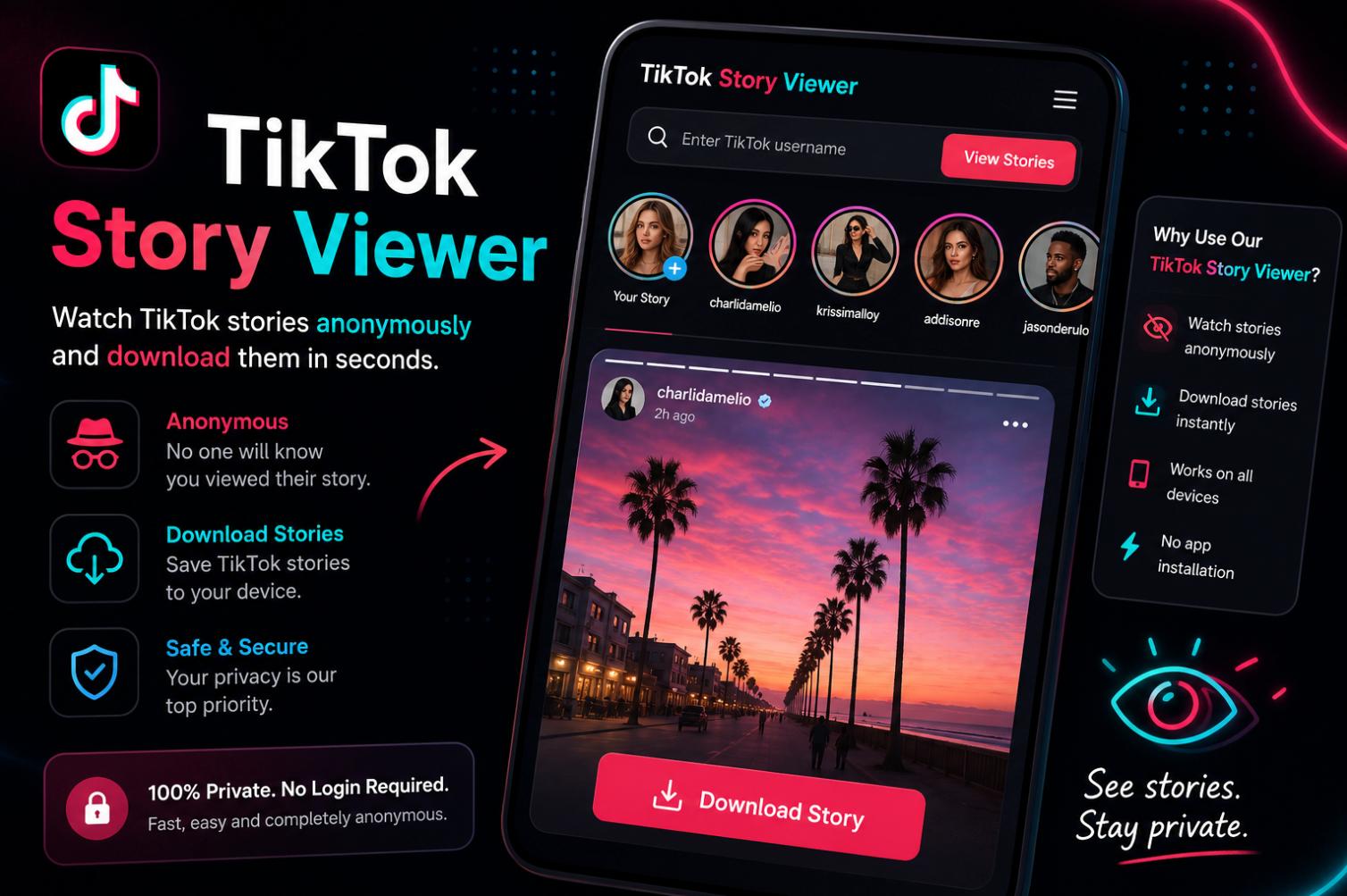
TikTok Stories are the short vertical clips that a creator posts to their audience for a 24-hour window before they disappear. Anyone the creator’s account allows can see them; each view leaves a name in the viewer list the creator can inspect. That last piece — the visible viewer list — is why “TikTok story viewer” as a search term has volume: users want to see stories without their identity being logged on the other side. This piece works through what actually happens when you view a TikTok story, what “anonymous” story viewers claim to do, what they can and cannot deliver, and where the practical picture leaves anyone thinking about the question.
What a TikTok story actually is
TikTok Stories were rolled out in 2023 as a specific feature that mirrors what Instagram Stories, Snapchat Stories, and their category peers have offered for years. A creator records a short vertical clip, posts it as a Story, and it appears to eligible viewers in a tray at the top of the app for 24 hours. After that window, the story is gone from the public interface, though the creator can save it to their own device before it disappears.
The visibility model matches other Story implementations. Creators can post to their whole followers list, a smaller Close Friends list, or a private set. Viewers who watch a story are logged in a viewer list the creator can check. That log is the specific piece of data that anonymous-viewer tools promise to help users avoid producing.
What “anonymous viewer” tools claim to do
A specific category of third-party sites and apps advertise the ability to view a TikTok user’s stories without appearing in the creator’s viewer log. These tools claim various mechanisms — proxying the request through their own accounts, using unauthenticated scraping of the story content, or exploiting specific API paths that do not attribute the view to a real user.
The specific promises range across categories. Some claim to work from a public account you know the username of. Some claim to work on private accounts as well. Some claim to preserve stories after the 24-hour window closes. Some claim to let you download story videos. The list of promises is broad; the list of promises actually delivered is narrower.
What the tools can actually do
The honest picture of what these tools can deliver, based on how TikTok’s underlying platform actually works, is more limited than the marketing suggests.
For public accounts, some tools can genuinely fetch story content and display it without logging a view on the creator’s side. The mechanism is unauthenticated web scraping — TikTok’s public web interface serves some story content in ways that do not require a logged-in user, and the third-party tool acts as a middle layer. When it works, the creator sees no view attributed to the user of the tool.
For private accounts, no legitimate tool can reveal story content, because TikTok’s platform does not expose private story content to unauthenticated requests. Any tool claiming this capability is either not delivering it or is doing something outside the platform’s rules that carries specific risks.
For downloading and preserving stories, some tools handle this reliably for public content; others handle it inconsistently or wrap the download in adware. The specific mileage varies substantially by tool.
What can go wrong
Users of TikTok story viewer tools should be aware of the specific ways things go wrong in this space.
Fake anonymous viewing. Some tools claim to hide your identity but actually route the request through your own account, logging a view on the creator’s side. Users assuming they were anonymous learn otherwise when the creator mentions the view. Testing on a friend’s account first — a friend who agrees to check the viewer list — is the safe way to verify a tool’s claim.
Credential harvesting. A specific category of malicious sites presents itself as a TikTok viewer tool and asks for your TikTok login. This is a phishing attempt. There is no legitimate reason for a story-viewer tool to require your login; the entire premise is that you view content without being attributed. Any prompt for TikTok credentials from a viewer tool should be treated as an attack.
Aggressive advertising. Free tools in this space often carry heavy ad loads — pop-up ads, notification prompts, and downloads pushed alongside the actual content. This is the standard low-quality-portal experience and warrants ad-blocker use.
Data collection. Any third-party tool through which you route requests can log what you searched for, what accounts you viewed, and other patterns. Users who care about privacy should assume every free viewer tool is logging usage patterns for their own purposes.
Platform response. TikTok has periodically taken enforcement action against tools that scrape at scale, including legal action in some cases. Tools that were up last month may not be up this month. Any specific recommendation ages quickly.
The specific behaviour worth understanding
A few small behavioural facts about TikTok Stories help clarify what viewing them actually reveals.
- Views are attributed by TikTok account, not by device. A view is logged against your username, not against your phone or browser. Using the same account across devices does not multiply views.
- Rewatching a story does not add multiple views; the viewer list shows unique viewers, not view counts per viewer.
- Viewer lists have historically been visible to the creator only for a specific window after the story is posted. Once the story expires and the 24-hour clock runs out, the viewer list becomes less accessible on the creator side, though TikTok’s specific implementation of this has varied over versions.
- Story viewing does not count toward the general engagement metrics that public creator dashboards emphasise. It is a separate stream of data used by creators to understand who is watching specifically their more intimate content.
- Viewer order in the list is not strictly chronological; it is influenced by a mix of recency, engagement, and TikTok’s own ranking, similar to Instagram’s story viewer list.
The ethical picture worth being honest about
Story viewer tools sit inside a specific ethical picture that is worth naming.
Public stories are, by design, public. Creators who post to their whole followers list have chosen to broadcast that content; viewing it is not a violation in any meaningful sense. Whether being anonymous rather than named is a violation depends on the creator’s expectations. Most creators do not scrutinise their viewer lists carefully; some do.
Private-account content is a different story. Attempting to view content from an account that has specifically restricted its audience is crossing a line the creator drew. Tools that promise to help with this are either failing to deliver (which is common) or facilitating a specific privacy violation.
The impulse to view specific people anonymously is often benign — curiosity about an ex, checking on a former friend, seeing what someone is up to without wanting to signal presence. But it can also be part of stalking patterns, harassment infrastructure, or non-consensual monitoring. Users should be honest with themselves about which category their specific use falls into, and creators experiencing patterns of anonymous viewing that feel concerning should be aware that specific tools make that pattern easier to sustain than it would otherwise be.
Practical alternatives to third-party tools
Users who want to view TikTok stories without logging a view have specific alternatives worth considering.
Create a secondary TikTok account. Following someone from a burner account produces the same view attribution problem but on an account not tied to your identity. This is the specific pattern many users adopt when they want to watch someone’s content without being visible on their own timeline. It is against TikTok’s terms if used to evade a block, but it is otherwise a common pattern.
Watch in a controlled way. If the specific concern is that a creator sees your view, waiting until the 24-hour window closes means the story is gone but the view attribution may still be recorded. Watching in the last few minutes before expiration does not change the log; the log is real-time.
Accept that some content is not meant for anonymous viewing. If a creator posts to Close Friends only, they specifically want to know who watched. Working around that intent is a specific choice worth thinking about.
Use official features where they exist. TikTok’s own privacy settings, muting, and unfollowing options are the sanctioned ways to control what appears in your feed and what data you share. Third-party tools are always second-best next to platform-native controls.
A short close
The TikTok story viewer tool category exists, mostly works for public accounts, and does not work for private ones. Users considering these tools should be honest about what they are looking for, aware of what the tools actually deliver, cautious about anything that asks for credentials or triggers unusual prompts, and thoughtful about whether their specific use aligns with the creator’s expectations. That posture ages better than any specific tool recommendation, because the specific tools available in any given month are less stable than the underlying pattern of use and the underlying ethical questions.